Stabilizing a Biotech Prototype Amidst Hardware Flux
Stabilizing biotech prototypes amidst hardware flux. Learn how we ensured FAT readiness through PLC/HMI refactoring and Servo drive migration.
Solution
Industry
Biotech / Pharma Manufacturing
Scope
Industrial Automation / PLC & HMI Development / Motion Control / Systems Commissioning
Timeframe
~4-5 Months (Base + Extensions)
2
Complex prototype units delivered simultaneously
5
Distinct bottle formats validated in Auto-Mode
100%
Adaptation to new sensor/motor architecture
The client
A Global Advanced Technology Group providing specialized aseptic processing machinery for the pharmaceutical industry, focusing on high-precision unit operations for vaccine and sterile liquid production.
Business needs
The client required urgent Control Engineering Support to deliver fully functional prototypes of two next-generation filling and closing machines. The goal was to finalize PLC/HMI software , support "Test Runs" in auto-mode for multiple bottle sizes, and execute FAT readiness verification.
The challenge
-
01
Hardware Instability — Reacting to mid-project migration from DC motors to Servo drives and replacing analog sensors, which required rewriting core logic blocks.
-
02
Mechanical Constraints — Compensating for mechanical issues, such as drive collisions and design limitations in the transport system, through software adjustments.
-
03
Scope Fluidity — Addressing emerging R&D discoveries through iterative extensions to the original scope without delaying the final handover.
Our solution
-
Adaptive Logic Development (PLC)
Rewriting critical control modules for the Transport Conveyor, Check Weight System, and Stoppering units.
-
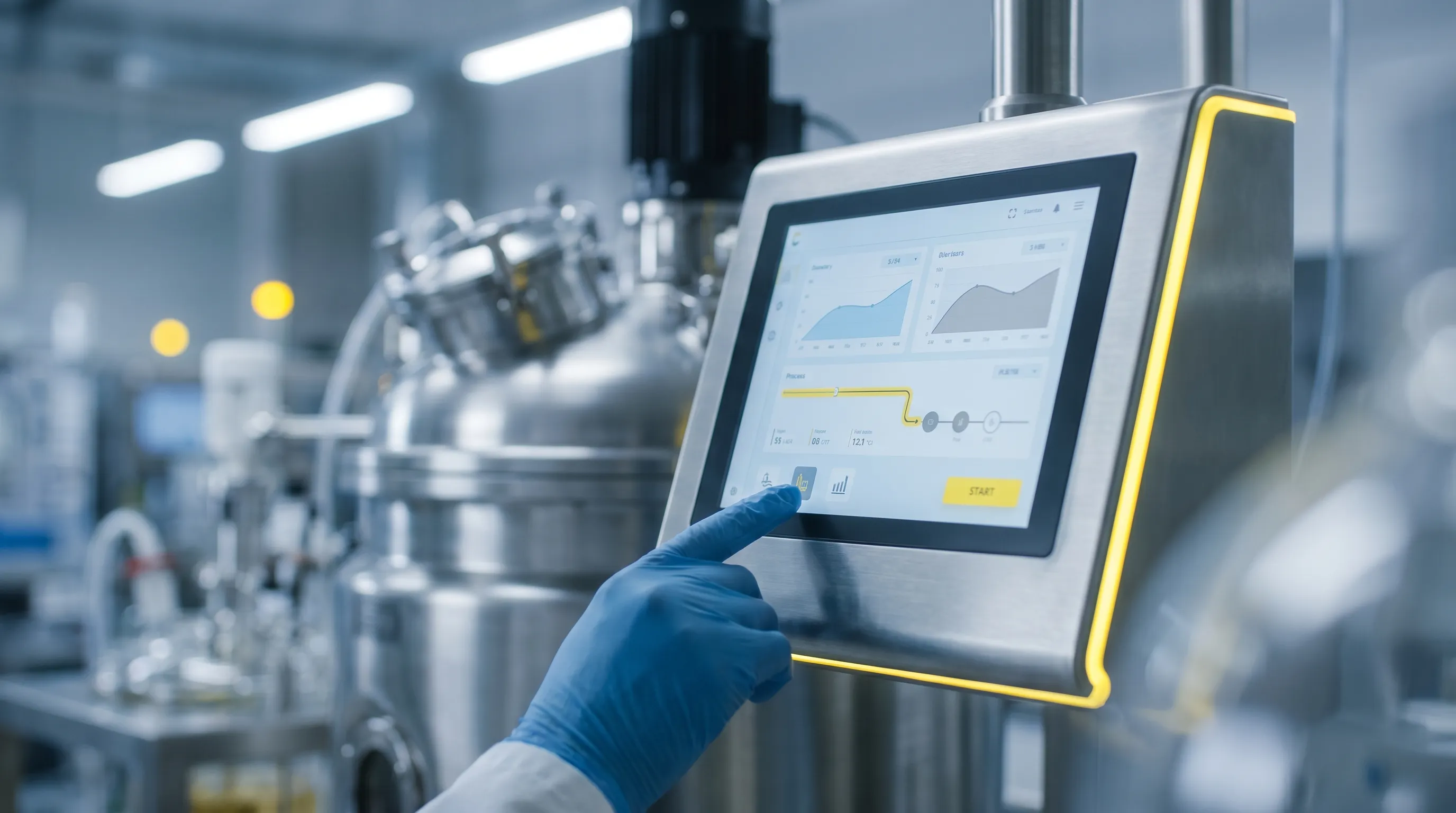
HMI Refactoring
Updating the operator interface to synchronize alarm handling and recipe management with modified machine capabilities.
-
Commissioning Support
Performing internal FAT verification and supporting final "Auto-Mode" test runs for all 5 defined bottle formats.
-
Software Handover
Delivering clean, documented software artifacts (PLC/SCADA projects) for immediate internal maintenance.
Technology used
- PLC (Codesys / IEC 61131-3)
- HMI/SCADA Development
- Motion Control (Servo Integration)
- Industrial Networks
The outcome
Despite significant mechanical and electrical interventions during the process, the software was delivered and validated. The project ensured FAT readiness and a complete logic migration, allowing the client to proceed with their commercial roadmap with full documentation and source code.
- FAT Readiness — Successfully supported the test run of the whole machine in auto mode.
- Hardware Adaptation — 100% logic migration from DC to Servo control for key transport modules.
- Seamless Handover — Complete transfer of source code and documentation for the client's team.
- Format Validation — 5 distinct bottle formats validated in Auto-Mode across 2 complex units.
What we implemented
- Servo Architecture — Migration from DC motors to high-precision Servo drives within the PLC logic.
- Auto-Mode Testing — Full operational verification for multiple bottle formats to ensure production readiness.
- PLC/HMI Synchronization — A unified interface reflecting real-time hardware status and alarm management.

In prototype development, the only constant is change. Our role wasn't just coding; it was providing the engineering agility to ensure that when the hardware changed, the machine didn't stop. We delivered functional stability in a fluctuating environment.
How can we help you?
Contact us todayOther success stories
-
-

Digital CDMO
Advancing Solar Tech with OT & Automation
-
Digital CDMO
Fully Automated Autosampling Control System