Controlled Perfusion of 3D Tumor Models
Industry
Biotechnology / Academic Research / Nanomedicine / Preclinical Research
Scope
Hardware Delivery / Modular Integration / Bio-modeling
Timeframe
2025 – ongoing collaboration
-
4
operators onboarded (team usage)
-
3
months design to delivery (fast time-to-market)
-
<5 min
setup time (rapid deployment)
01
CLIENT
A leading European academic research group working in the field of nanomaterials, bioprinting, 3D tumor models, and advanced drug delivery research. The team develops 3D-printed tumor-mimicking hydrogels with embedded perfusion channels and uses fluorescence-based analysis to investigate how nanoparticles penetrate from a vessel-like channel into the surrounding extracellular matrix (ECM).
02
BUSINESS NEEDS
The research team required a stable and reproducible perfusion platform that would:
- Simulate vessel-like flow conditions within 3D tumor models
- Enable controlled, unidirectional perfusion through custom-built perfusion chambers
- Support quantitative analysis of nanoparticle transport over time and across concentrations
- Integrate seamlessly with fluorescence imaging systems
- Operate reliably during long experimental runs
- Allow remote technical support and software updates
The priority was to maintain consistent, repeatable process parameters, ensuring the technical setup supports the full complexity of the biological experiments.
03
CHALLENGE
To help our client achieve its goals, we overcome the following challenges:
-

Physiological Perfusion
Reproducing physiologically relevant, stable perfusion within soft 3D-printed hydrogel tumor models. -

Continuous Flow
Maintaining controlled, continuous unidirectional flow without disrupting the experimental structure. -

Workflow Integration
Integrating the perfusion platform with custom chambers and fluorescence imaging workflows.
04
SOLUTION
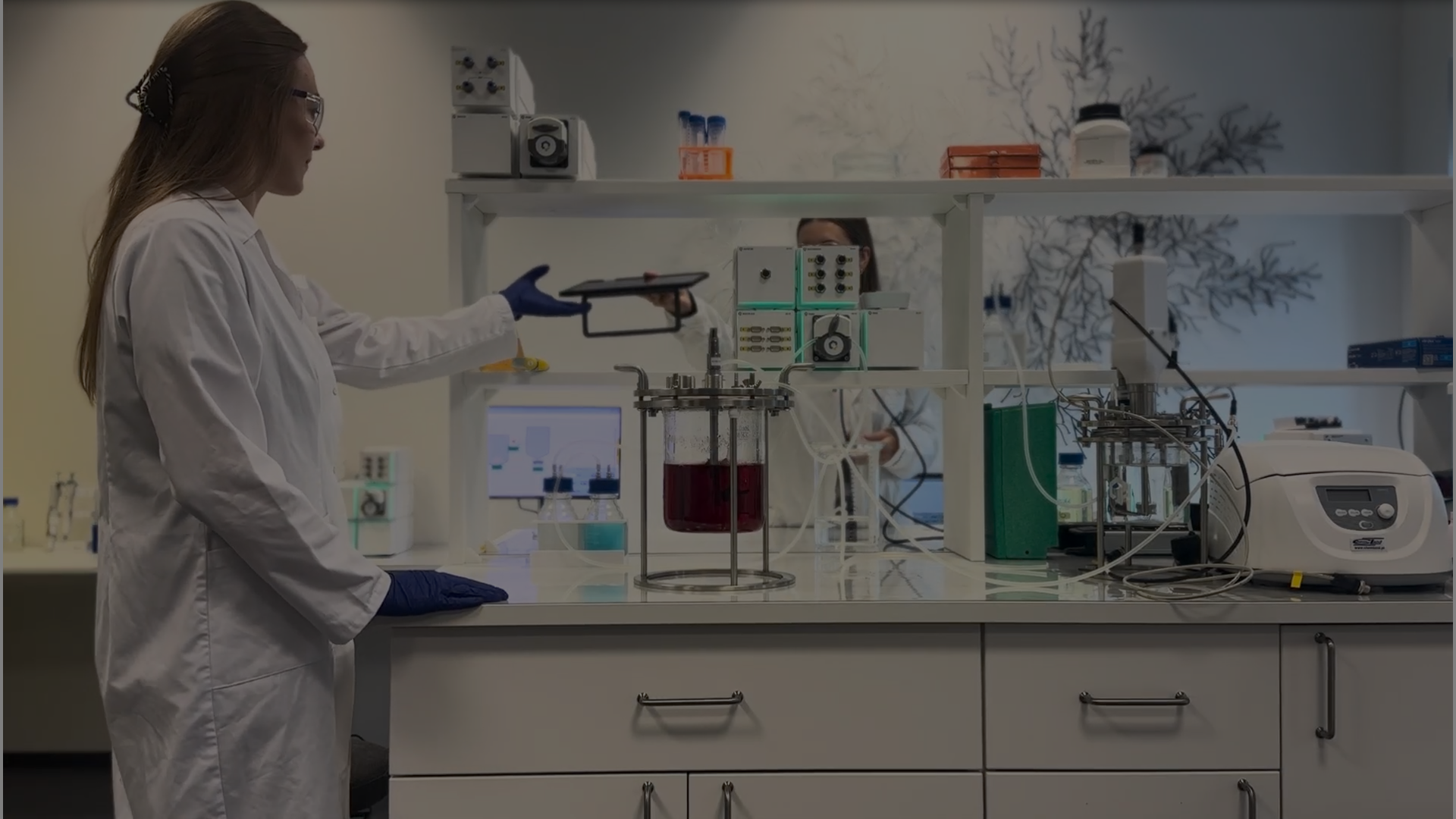
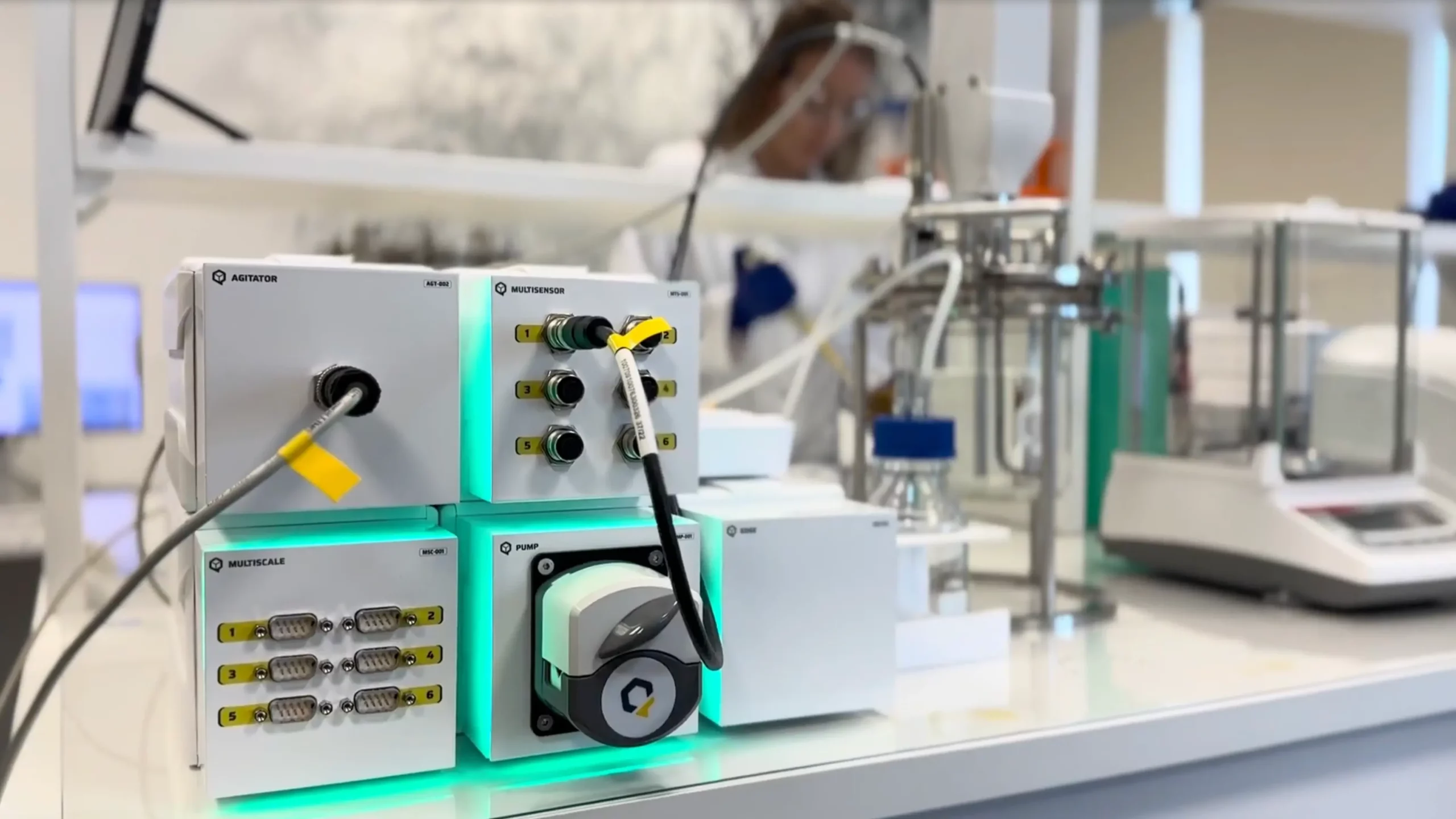
A4BEE delivered and configured a modular QB Systems setup consisting of EDGE main unit, two QB peristaltic pumps, QB pressure sensor module, and a custom Perfusion chamber. The solution entailed:
- Hardware Configuration Delivery and configuration of QB Systems perfusion hardware.
- Process Control Setup of unidirectional constant flow operation and pressure fluctuations monitoring.
- System Integration Integration with the client’s custom 3D-printed perfusion chamber.
- Remote Support Secure VPN configuration for remote updates and support.


Our goal was to make QB Systems disappear into the background of the experiment. The researchers should focus on nanoparticle behavior and data analysis - not on stabilizing flow conditions or troubleshooting hardware.
Paweł Godawa
Service Delivery Manager at A4BEE
Technology used
05
OUTCOME
QB Systems enabled the research team to establish a robust perfusion platform. This solution acts now as a reliable experimental foundation, allowing the team to shift their focus toward refining biological models and analytical methods rather than managing manual fluid control challenges. By bridging the gap between hardware and research, the solution enabled stable conditions and reproducible results.
- Stable Perfusion Stable, controlled perfusion within 3D tumor-like hydrogel models.
- Reproducibility Reproducible experimental conditions across multiple runs.
- Quantitative Analysis Quantitative fluorescence-based analysis of nanoparticle penetration over time.
- Reduced Variability Reduced technical variability in long-duration experiments.
06
IMPLEMENTED SOLUTION
-

Modular Architecture
Enabling future expansion and adaptation to evolving research needs. -

Precise Flow Control
Stable long-term performance with integrated pressure monitoring. -

Remote Connectivity
Enabling diagnostics, software updates, and technical support via VPN.
-
4
operators onboarded (team usage)
-
3
months design to delivery (fast time-to-market)
-
<5 min
setup time (rapid deployment)