Bioreactor Control: Computer Vision
for Non-Invasive Foam Management
Industry
Life Sciences / Biotech
Scope
Computer Vision / Python / Closed-Loop Control / Industrial Automation / AI
Timeframe
3 months
-
3
Control Modes – (Interval, Vector, PWM) developed for different foam types.
-
100%
Non-Invasive – No contact with the biological product.
01
CLIENT
A Global Life Sciences leader focused on optimizing upstream bioprocessing. The client sought to eliminate manual interventions in bioreactor management to reduce contamination risks and improve process consistency across their R&D facilities.
02
BUSINESS NEEDS
Foam formation in bioreactors is a critical process risk that can lead to filter blockage and batch loss. The client needed an automated, non-invasive solution to detect and mitigate foam in real-time, replacing the reliance on manual operator checks and reducing the excessive use of antifoam chemicals which can affect cell growth.
03
CHALLENGE
To help our client achieve its goals, we overcome the following challenges:
-

Subjective Monitoring
Reliance on operators to visually check bioreactors meant slow reaction times and "safety margins" leading to chemical overdose. -

Hardware Constraints
Traditional internal probes suffer from fouling; the solution required a non-invasive (external) approach. -

Complex Physics
Foam behavior varies (slow-rising vs. "flash foam"), requiring adaptable control logic rather than simple on/off switching.

04
SOLUTION
We engineered a retrofit "Computer Vision Watchdog"—an external camera system paired with intelligent control algorithms that autonomously manages antifoam dosing. The solution entailed:
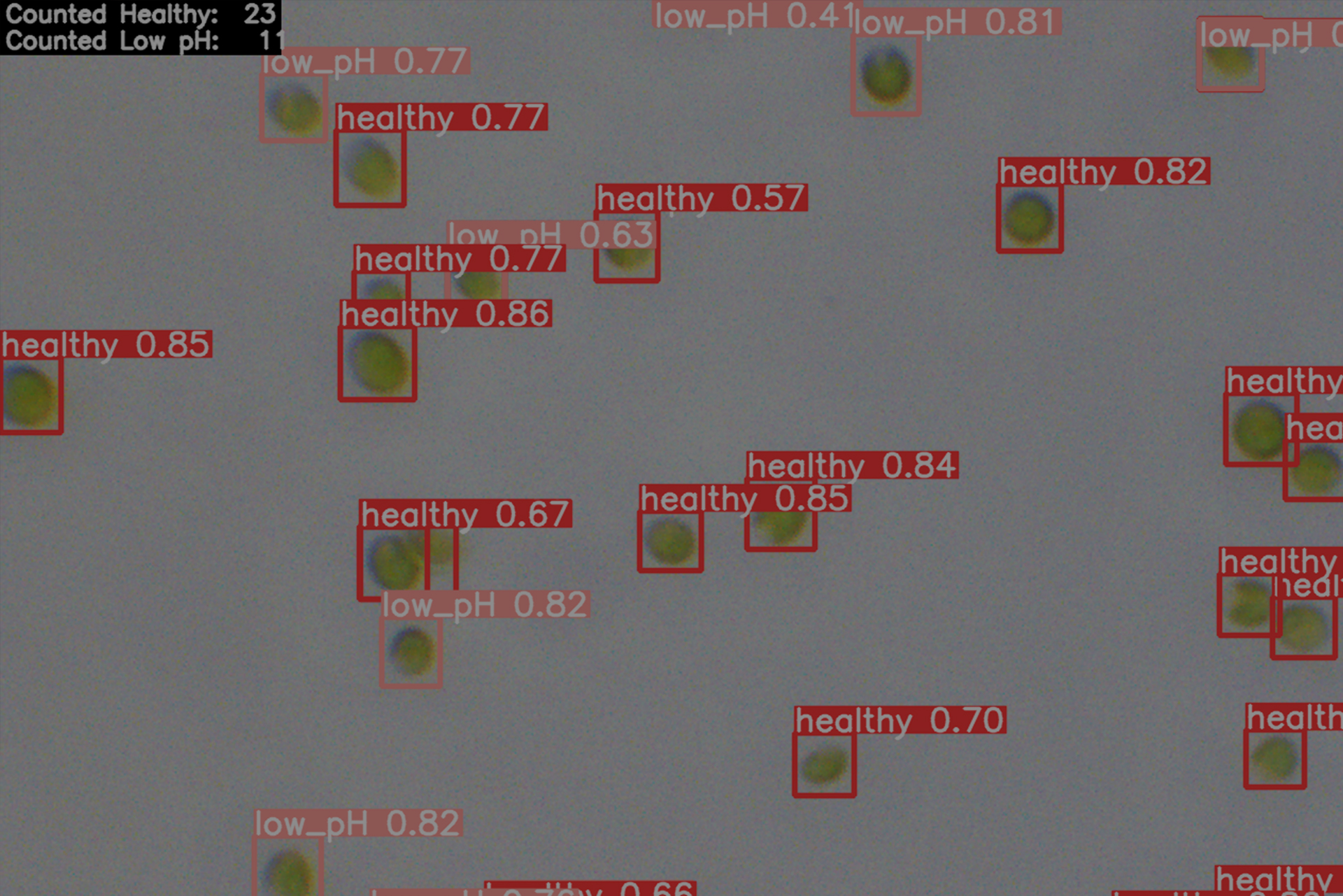
- Computer Vision Detection Utilized external cameras and Python-based image processing algorithms to detect foam levels and density in real-time without physical contact with the medium.
- Adaptive Control Logic Implemented advanced dosing algorithms (PWM Logic & Vector Control) that adjust pump activity based on foam behavior—delivering precise pulses for slow foam or rapid intervention for "flash foam."
- Hardware-Agnostic Retrofit Designed the system to integrate with existing bioreactors and pumps, acting as a smart "brain" between the sensor and the actuator.


The transition from manual oversight to computer vision provided bioreactors with autonomous „eyes,” enabling real-time detection and response. This system manages foam with a level of precision and consistency unattainable by human operators, significantly reducing both chemical consumption and overall process risk.
Krystian Maskulanis
Industrial Systems Engineering Lead
Technology used
05
OUTCOME
The prototype successfully demonstrated that external visual monitoring can effectively close the control loop for foam management. The project resulted in a robust system that fundamentally transformed the client's operational capabilities, ensuring 24/7 autonomous monitoring and non-invasive safety protocols.
- Risk Reduction 24/7 autonomous monitoring eliminates the risk of human error or missed foam events.
- Chemical Savings Adaptive dosing logic ensures the minimal effective volume of antifoam agent, significantly reducing chemical overhead while preserving the biological environment.
- Non-Invasive Safety Zero risk of contamination as the sensor system remains outside the sterile boundary.
06
IMPLEMENTED SOLUTION
-

3 Control Modes
Interval, Vector, and PWM modes developed specifically for different foam types and behaviors. -

Real-time Response
System response time from detection to pump activation reduced to less than X seconds. -

100% Non-Invasive
Absolutely no contact with the biological product, maintaining perfect sterility.
-
3
Control Modes – (Interval, Vector, PWM) developed for different foam types.
-
100%
Non-Invasive – No contact with the biological product.