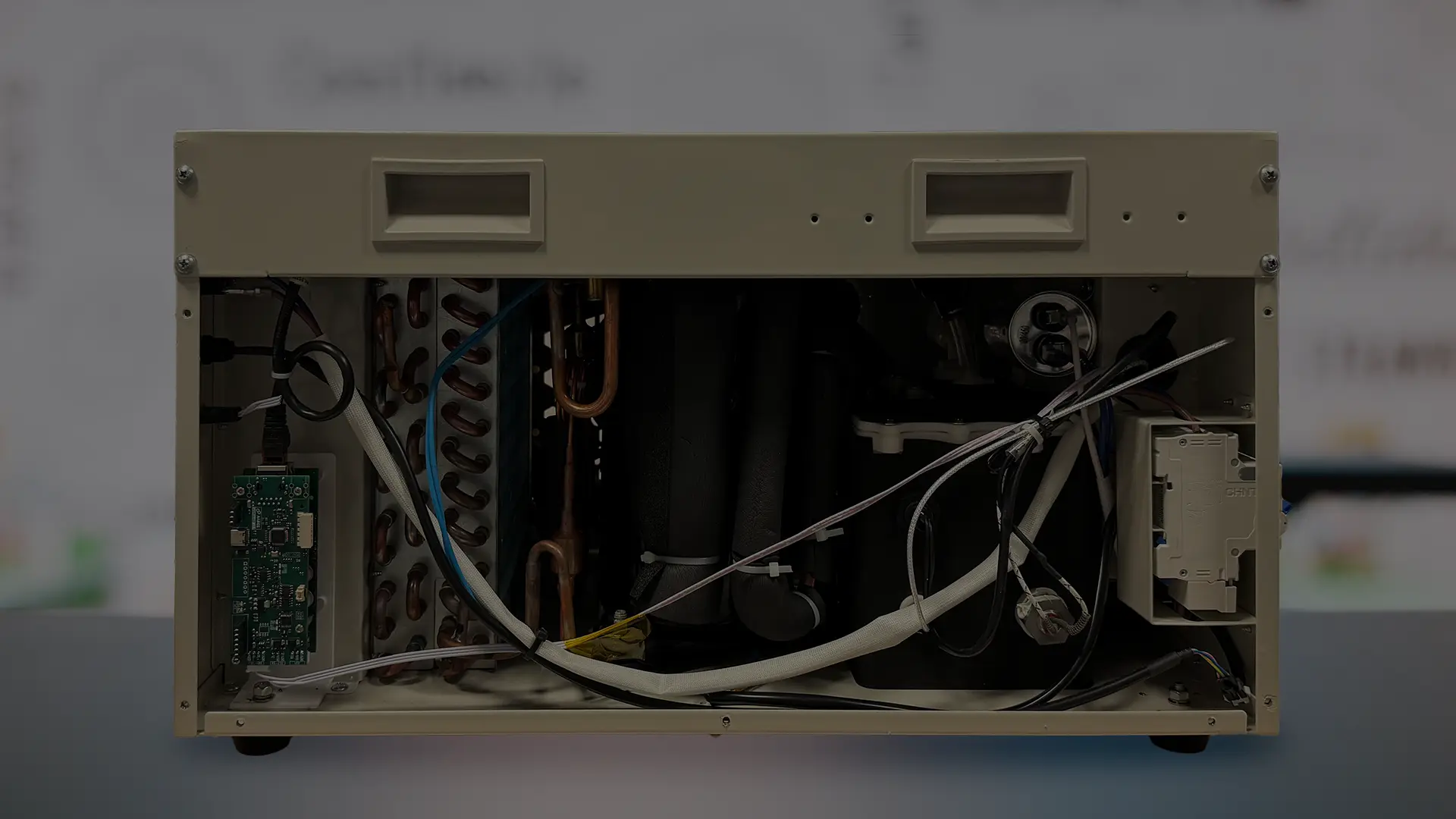
Scaling Biotech Manufacturing via Universal IT/OT Architecture
Industry
Biotech / Pharma
Scope
IT/OT Integration, Full-Stack Development, Software Architecture, System Scaling, Modular Systems
Timeframe
4 months
-
99%
manual configuration error elimination
-
3
unified systems under one IT base system
-
40%
faster cross-system integration
01
CLIENTS
The client is a global life science leader specializing in the research, development, and manufacturing of pharmaceuticals and vaccines. Their operations cover critical health areas, including oncology, infectious diseases, and diabetes, supported by large-scale global distribution networks.
02
BUSINESS NEED
The primary objective was to integrate specialized OT software—designed to manage advanced cell culture mixing devices—into a pre-existing enterprise IT system built on a universal control architecture. The client required the extension of their existing code library to transform it into a production-ready, highly adaptable ecosystem capable of managing diverse laboratory equipment.
03
CHALLENGE
To help our client achieve its goals, we overcome the following challenges:
-
Architecture Integrity
We needed to maintain the stability of the core control library while integrating complex new device types, ensuring zero disruption to existing equipment functionality -

Large-Scale Collaboration
Synchronizing development efforts across as many as eight diverse teams during the final project phases. -

Bridging the IT/OT Gap
A significant challenge lay in creating a seamless "bridge" between low-level PLC execution and high-level web services. We needed to align the OT control layer (handling sensors, pumps, and agitators) with the IT layer to ensure real-time data flow and responsiveness in a single interface. -
Legacy Modernization
The project involved refactoring a core codebase developed over an 8-year period to meet modern performance and security standards.

04
SOLUTION
We bridged specialized mixing hardware with the enterprise environment by leveraging and modernizing the client's existing control library and extending it with a set of modular, reusable features.
- Universal Control Library Expansion Significantly broadened the control library, enabling the seamless addition of diverse hardware assets without custom coding for each instance.
- Full-Stack IT/OT Alignment Successfully aligned the OT control layer with the IT architecture, creating a unified data flow from the device to the enterprise level.
- IT/OT Settings Management Implemented a dynamic configuration framework that synchronizes critical process data between physical hardware and the digital business environment.

Our focus was on turning the proprietary architecture into a truly universal bridge between specialized hardware and enterprise-level software. By integrating the device's OT layer into this established system, we demonstrated that even long-standing legacy environments can be modernized into agile, scalable platforms. We’ve provided the client with a unified software ecosystem where adding new, complex devices is now a streamlined process, directly accelerating their ability to deploy biotech innovations globally.
Maciej Jarkowski
Software Engineering Lead
Technology used
05
OUTCOME
The project successfully launched a fully validated, market-ready mixing system that is now a unique product in the client's portfolio. By bridging specialized OT hardware with enterprise IT infrastructure, we delivered a unified ecosystem that ensures total data consistency and operational transparency. This scalable architecture simplifies global asset deployment and lowers maintenance costs by replacing fragmented legacy code with a standardized, modular foundation.
- Accelerated Time-to-Market The modular approach allows the client to integrate new devices significantly faster by reusing existing components.
- Global Scalability Integrated support for multiple languages and standardized measurement units ensured the system was ready for immediate global rollout.
- Refactored Performance Modernized aging code into a high-performance asset, extending the utility of the client's software investment.
06
IMPLEMENTED SOLUTION
-

Hot-Swap Capability
Engineered logic that allows for hardware replacement and reconfiguration without system downtime. -

Seamless External Connectivity
Enabled robust "Connect to External System" modes using OPC-UA and Ethernet/IP protocols for reliable data exchange. -

Standardized Measurement Units
Introduced a unified "Unit of Measure" framework to ensure total data consistency across all integrated devices. -

Global Localization Framework
Integrated support for multiple languages, including complex character sets like Chinese, for the operator interface.
-
99%
manual configuration error elimination
-
3
unified systems under one IT base system
-
40%
faster cross-system integration